
Class 1 truck driver: pay in Quebec and Greater Montreal
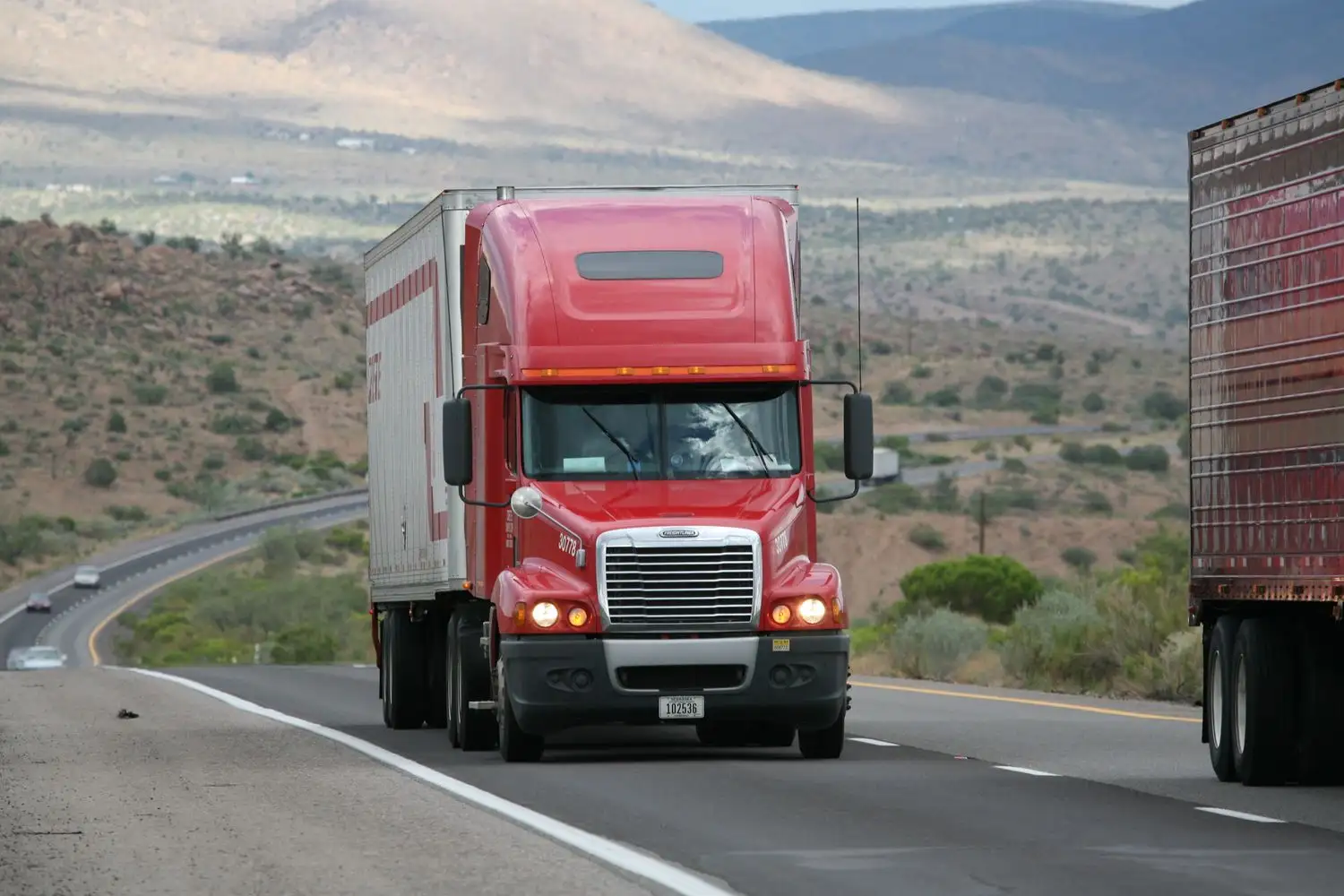
A Class 1 truck driver pulls a combination of road vehicles: a tractor coupled to one or more semi-trailers. Around Greater Montreal, that means serving warehouses, plants and the port, on regional runs as much as long haul. This page covers pay region by region, shifts, SAAQ requirements and the training you must complete before the exams.
- Quebec median
- $25.20/h
- Range
- $19.45 – $34.50/h
- Montreal
- $23.68/h
Guichet-Emplois (Job Bank), edition 2025 · CNP 73300
Hiring a class 1 truck driver in Montreal, Laval or the South Shore? Hire a class 1 truck driver · Our service: logistics and supply chain
Class 1 truck driver pay, region by region
| Region | Low | Median | High | vs Quebec | Offered in postings |
|---|---|---|---|---|---|
| All of Quebec | $19.45 | $25.20 | $34.50 | — | — |
| Montérégie | $19.75 | $25 | $33 | −1% | $29.25 (236) |
| Montréal | $16.15 | $23.68 | $33.75 | −6% | $28 (174) |
| Laval | $19.75 | $25 | $35.20 | −1% | $30 (58) |
| Lanaudière | $20 | $27 | $36 | +7% | $26.72 (64) |
| Laurentides | $21.50 | $27 | $36.06 | +7% | $28.95 (105) |
The table covers NOC 73300, transport truck drivers: Class 1 and Class 3 are counted together in it, straight trucks alongside semi-trailers. It leaves out dispatch (14404), road transport supervision (72024) and delivery drivers (75201), each of which carries its own code and its own figures.
Low, median and high wages published by Job Bank (NOC 73300), and pay offered in Greater Montreal job postings (6 months, February to August 2026); in brackets, the number of hourly postings — under ten, no median is shown.
Quebec median by file edition: 2023: $24/h · 2024: $25/h · 2025: $25.20/h.
What the job postings say
Of 680 postings on Job Bank in Greater Montreal (6 months, February to August 2026), 10% mention a night shift, 11% an evening shift and 9% weekends.
Regional work starts early and ends at night: the driver sleeps at home. Long haul is counted in days, with a sleeper berth and a trip home at the end of the cycle. A single day caps at 13 hours of driving and 14 hours of work, and calls for 10 hours off duty, 8 of them consecutive. The 7-day cycle stops at 70 hours of work, the 14-day cycle at 120. The same limits appear in the Quebec regulation and in the federal Commercial Vehicle Drivers Hours of Service Regulations; the moment the truck leaves the province, the federal one governs. Yard shunting, by contrast, fits into a fixed shift and never leaves the site.
What a class 1 truck driver does
- Drive a road tractor coupled to one or more semi-trailers, on roads in Quebec, Ontario and the United States.
- Run the pre-trip inspection before leaving: brakes, tires, steering, lights, coupling. It stays valid for 24 hours at most.
- Couple and uncouple the semi-trailer, connect air lines and the electrical cord, back into loading docks.
- Check that the load is secured and that weight stays within the permitted limit per axle.
- Plan the trip and gather the paperwork: bill of lading, manifest, customs documents when the run crosses the border.
- Log driving and rest hours in the truck’s electronic logging device.
- Report defects to the carrier: immediately for a major one, within 24 hours for a minor one, repaired within 48 hours.
- Stay in touch with dispatch and with the customer through loading, the run and delivery.
- Carry out roadside emergency repairs that are within the driver’s reach.
Requirements, cards and certifications
- A SAAQ Class 1 licence, obtained after holding a valid Class 5 licence for at least 24 months.
- A driving record under 4 demerit points, with no licence suspension or revocation in the past 2 years.
- A medical and vision report confirming that your health meets SAAQ standards.
- The F endorsement on the licence, required to drive a heavy vehicle fitted with air brakes.
- A transportation of dangerous goods (TDG) training certificate, valid 36 months for road transport, when the load calls for it.
- A FAST card from the Canada Border Services Agency, valid 5 years, to use the dedicated commercial lanes at the border.
Training
Two paths lead to the SAAQ exams, and one of them is now mandatory. The first is the Programme d’éducation à la sécurité routière (PESR – classe 1), the province’s road safety education program, at least 125 hours long: 75 hours of theory and 50 hours of practice, with a provider recognized by the SAAQ. The second is the DEP Transport par camion, a Ministry of Education vocational diploma, program 5291, 615 hours, taught in vocational training centres listed on Inforoute FPT. Then come the medical report, the theory exam, the pre-trip inspection exam and the road test, each requiring 75 % to pass. The learner’s licence, valid 18 months, covers supervised practice in between.
Career path
After a few years on the road, Class 1 drivers often move into dispatch, driver training or road transport supervision, three roles the National Occupational Classification keeps separate from theirs. Others stay behind the wheel and specialize: tanker, flatbed, oversized loads, dangerous goods. Buying a tractor and working for yourself is the third route.
Frequently asked questions
What is a Class 1 truck driver?
It is the driver licensed to operate a combination of road vehicles: a tractor coupled to one or more trailers or semi-trailers. In Quebec, the SAAQ Class 1 licence also covers every other vehicle class except motorcycles. It is the licence behind semi-trailer freight, on regional runs as much as long haul.
How much does a Class 1 truck driver make in Quebec?
The table above shows the low, median and high hourly wage Job Bank publishes for the occupation, for Quebec as a whole and then for each Greater Montreal region, next to the pay offered in job postings. What you earn then depends on how the carrier pays: by the hour, by the mile or by the trip.
What is a Class 1 driver in Canada?
Licence classes are provincial: Quebec’s Class 1 matches Class A in Ontario and several other provinces, where the air brake endorsement is the letter Z rather than Quebec’s F. The job itself is the same across the country. The National Occupational Classification files it under code 73300, transport truck drivers. Running into the United States adds the customs paperwork on top.
What is the difference between a Class 1 and a Class 3 licence in Quebec?
Class 1 covers a combination of road vehicles, so a tractor pulling one or more semi-trailers. Class 3 stops at straight trucks with 3 or more axles, or 2 axles and a net mass of at least 4,500 kg. Class 1 lets you drive a Class 3 truck; the reverse does not hold. And only Class 1 requires a training program before the exams.
What training do you need for a Class 1 licence in Quebec?
Training is now mandatory before the SAAQ exams. You either take the PESR – classe 1 road safety education program, at least 125 hours split into 75 hours of theory and 50 of practice, or the DEP Transport par camion, a 615-hour vocational diploma from the Quebec Ministry of Education.
Can you become a Class 1 driver with no experience?
Yes, though not with a blank record. You must have held a valid Class 5 licence for 24 months, show fewer than 4 demerit points and no suspension or revocation in the past 2 years, file a medical report, complete the mandatory training and pass the three exams. The learner’s licence, valid 18 months, covers the practice phase.
What is a switcher or yard driver?
It is yard shunting: moving semi-trailers between the docks and the lot of a warehouse with a yard tractor. The day is made of coupling, uncoupling and reversing, with almost no road time. Those are precisely the manoeuvres the SAAQ road test grades for Class 1.
Can a Class 1 driver be incorporated?
Yes, and the National Occupational Classification recognizes that these drivers may be self-employed. But Revenu Québec decides the status on the facts, not on the structure you choose: subordination at work, ownership of the tools, financial risk and how far the work is integrated into the business all weigh more than the signed contract.
How many hours a day can a Class 1 driver drive in Quebec?
Thirteen hours of driving and 14 hours of work per day, with 10 hours off duty, 8 of them consecutive. The 7-day cycle caps at 70 hours of work, the 14-day cycle at 120 hours. The same limits sit in the Quebec regulation and in the federal Commercial Vehicle Drivers Hours of Service Regulations, and the federal one follows the truck out of the province. The electronic logging device records it all.
Do you need the F endorsement for air brakes in Quebec?
Yes. The F endorsement states that you may drive a heavy vehicle fitted with an air braking system. You add it to the licence by passing the exams in a vehicle so equipped, either at the same time as the Class 1 theory exam or later on. Elsewhere in Canada the same endorsement carries the letter Z.
How long does it take to get a Class 1 licence in Quebec?
It depends on the path. The PESR – classe 1 program runs at least 125 hours; the DEP Transport par camion runs 615 hours, roughly four months full time. Then come the medical report, the theory exam, the pre-trip inspection exam and the road test, each needing 75 % to pass, with a seven-day wait before any retake. The learner’s licence stays valid 18 months.
Are you a class 1 truck driver?
Leave your number: we text you when a role matches your profile.
Get job offersHiring a class 1 truck driver?
A job description to copy, interview questions and a pay benchmark by region.
Hire a class 1 truck driver